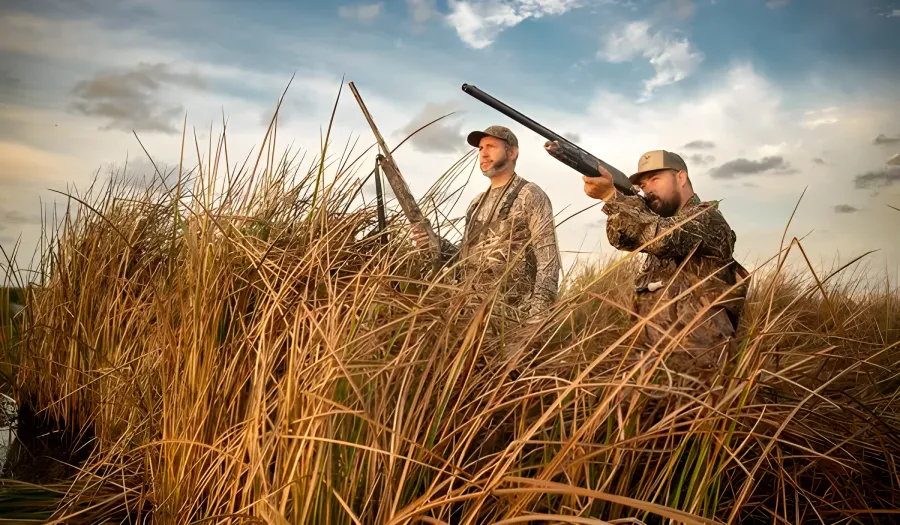
Why the Texas coast is duck country
Texas sits at the bottom of the Central Flyway, and the birds that ride it down stop here. The rice prairies around Garwood, Eagle Lake and El Campo hold ducks and geese all winter, and the marsh from Matagorda down to Port O'Connor is some of the richest waterfowl habitat on the Gulf. Most of it is under an hour from our door in Rosenberg.
That's why waterfowl isn't an afterthought here. We treat it as a department of its own: shotguns that hold up in salt and mud, non-toxic shot in the sizes people actually shoot, and the chokes and calls to go with them. Order online and it ships to your local FFL.
Where people hunt
You don't need a lease to hunt the coast. TPWD's public hunting lands open a lot of country to anyone with an Annual Public Hunting permit, and the drawn hunts on the coastal WMAs — Justin Hurst, Mad Island, Guadalupe Delta — are worth putting in for every year. If you'd rather be shown the ropes, the guided rice-prairie hunts north of Bay City are a fast way to learn what a good spread looks like.
Picking a waterfowl shotgun
For most people the answer is a 12-gauge chambered for 3-inch shells, semi-auto or pump, with a synthetic stock you won't cry over when it gets scratched. Run a modified choke with steel — steel patterns tighter than lead, so the full choke you'd reach for with lead usually over-constricts. If recoil is a problem, or you're setting up a youth hunter, a 20-gauge with bismuth is a better gun than a 12 they flinch behind. Fit matters more than brand: a gun that comes up straight beats a nicer one that doesn't.